
What is a homeland?
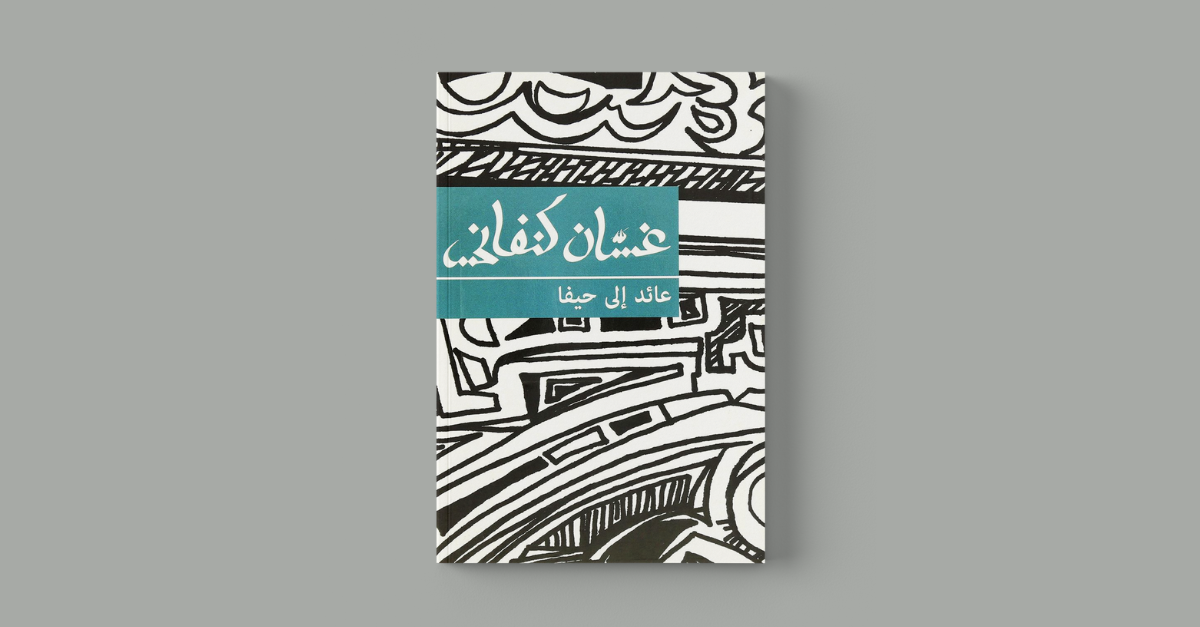
Ghassan Kanafani poses this question in Returning to Haifa, his final novella before his death. Throughout the story, he spirals through a plethora of definitions that each feel incomplete: an oak tree, two chairs, an abandoned son – only to reject them at the end. For Kanafani, a homeland is an affiliation, a belonging earned through struggle, not blood.
Born in 1936 and assassinated in 1972, Ghassan Kanafani was a Palestinian author, journalist, intellectual, and political activist whose weapons were his pen and his voice. But even a pen proved threatening enough to make him a target for assassination by the Israeli intelligence agency, Mossad. Kanafani remains a highly influential figure in Arabic literature, as his ideas and writings introduced successive generations to the Palestinian cause, transforming literature itself into an act of resistance.
Published in 1969, Returning to Haifa follows the 1948 Nakba and the ethnic cleansing of Haifa. The novella follows Said and his wife, Safiya, who were forcibly exiled from their homeland, leaving their infant son, Khaldoon, behind. Twenty years later, Said and Safiya were able to return to Haifa after movement restrictions between certain Palestinian territories were eased following the 1967 war.
Burdened by decades of guilt, Said and Safiya travel through the streets of Haifa toward their former home like strangers in a familiar land, carrying with them a lifetime of memories. At the house they once called home, every corner echoes with familiarity, and every detail awakens memories long buried in time. As Myriam tells the story of how she and her husband, Ifrat Koshen, immigrated to Haifa and were granted a house and a five-month-old child, the past gradually unfolds before Said and Safiya. The infant they had left behind, Khaldoon, had grown into Dov, raised by the Jewish family and later drafted into the Israeli army under mandatory military service.
Standing face to face with his son as though they were enemies on opposite sides, Said realizes that a person is not defined by memories, blood, or material possessions, but by the cause they choose to defend. Likewise, a homeland is not merely a collection of houses, plants, and arbitrary borders; it is defined by its ability to provide security, dignity, and a sense of belonging, rather than leaving its people feeling alienated in their own land. The novel concludes with Said longing to see Khaled again, the son he left behind in Ramallah; while Said had asked him not to, he finds himself hoping his son had defied his fathers orders joined the Fedayeen after all
The first half of the novella is saturated with regret, nostalgia, and trauma, as Said roams the streets of Haifa like a foreign tourist, filled with agony and trapped in guilt for leaving his beloved home and son behind. In the second half, the tone shifts from sheer sorrow to deep, cold clarity, as Said reaches the realization that his long-lost son is ideologically and culturally estranged from his parents. The narrative asserts that an individual’s identity is defined by their historical positioning and not their biological bond. Kanafani ends the novella by passing the torch of resilience and defiance from Said to Khaled, handing it to the generations yet to come.
Returning to Haifa marks Kanafani’s departure from a passive, nostalgic, and sorrowful style toward one that urges mobilization, action, and resistance. This struggle migrates through generations and borders, to Gaza and South Lebanon, where homeland is not a memory but a rightful claim. This novel is an essential read for readers interested in understanding the philosophical underpinnings of intifada, identity dilemmas, and the trap of nostalgia and remorse.
