
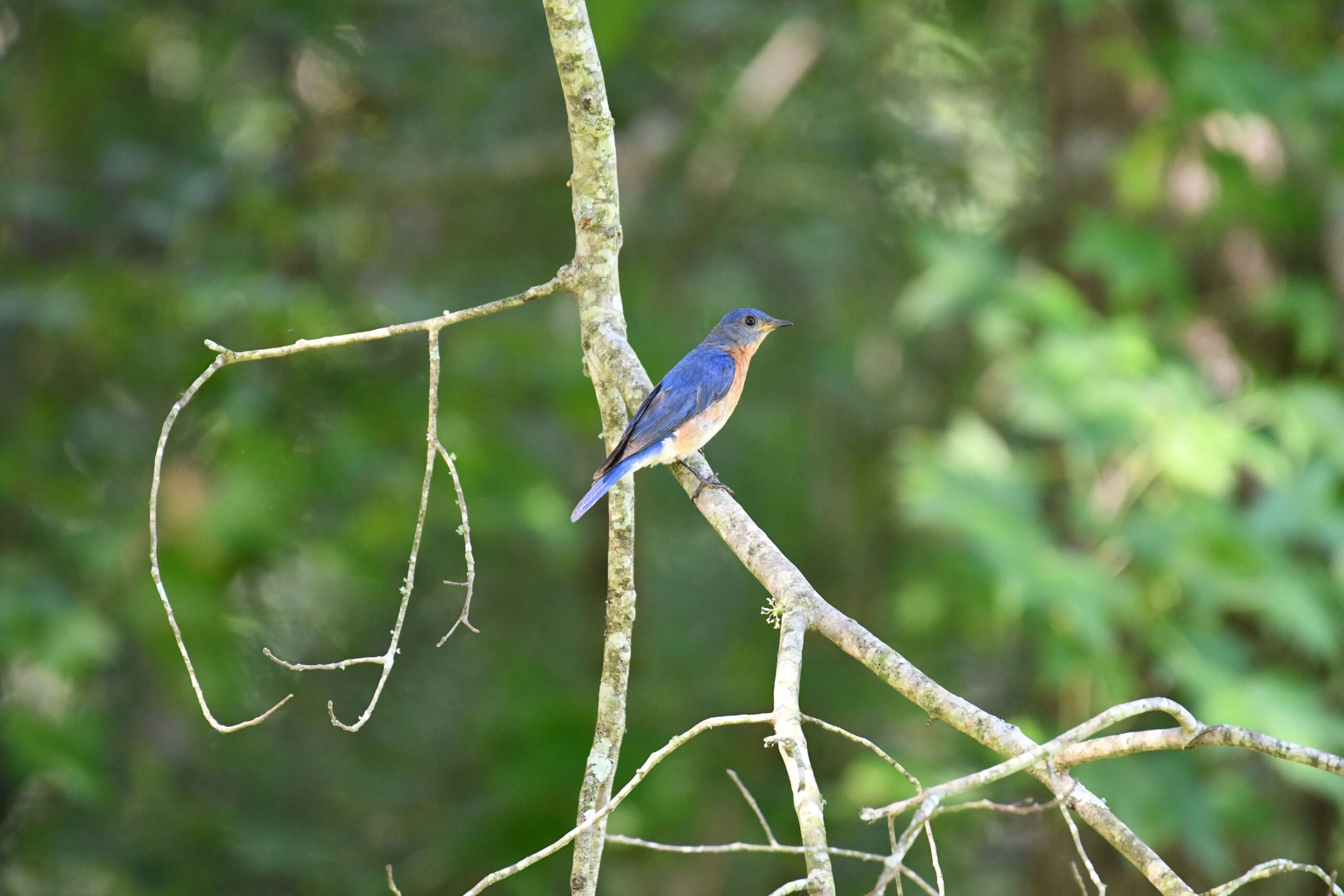
The Song
“I wish you love” playing in my head for the first time. One of Agatha Christie’s novels in hand; I can’t recall whether it was Nemesis or a Caribbean Mystery. I flipped the page, placed a bookmark, and played the song again, now with my eyes shut.
“I wish you bluebirds in the Spring,
to give your heart a song to sing,
and then a kiss but more than this,
I wish you love.”
I opened my eyes and looked out the window searching for bluebirds; there were none. Funny, I don’t recall the last time I saw a bluebird. I nearly returned to my book but couldn’t help looking out the window again. I lifted my eyes up at the sky—strange that wasn’t my first instinct—and noticed a flock flying in a syncopated rhythm. One would change course, the others would follow, ascending and descending as though the sky belonged to them. I couldn’t tell if they were blue though. Their color contrasted against the blueness of the sky; only their silhouettes could be seen. The sun was about to set, and the birds were still looping in circles, the universe, their theatre. An audienceless theatre. Around me, no one noticed the show—I myself would’ve missed it, if it wasn’t for the song.
The next day, on my way to class, the sea called out to me. It too had a performance to put on. The sun laid its rays on the restless waves and the sea glimmered in response, sending shivers down my spine. I passed by this spectacle every day for two years, yet only now was I able to witness it. I returned later, as the sun set, drawing the drapes on the spectacle, to be continued.
I stood there ashamed, dazzled by what I just witnessed; not the performance or the scenery, but the blindness. If the sea can go unseen for so long, what else could I have missed? How many faces have I treated as scenery? Or passed by wan smiles carrying mountains of sorrow? How much of this life have I spent half-awake, half-listening and half-present? How much suffering have I forsaken just because it hadn’t touched me directly?
It was right then, my fellow human, that the epiphany arrived: we don’t only overlook the beautiful.
We overlook the human.
The Distance
He had learned by then to lift his head, to look up. But what if all the birds were gone and the sky only held smoke now? What if the thunder was no longer thunder at all? Could it be that the sky played him, baiting him with beauty only to trap him inside its hideous interior?
Little did he know the spectacle could become ominous. Could he have imagined that the glimmering waves he once contemplated now bore warships, agents of chaos, or that the bluebirds were nowhere to be found? Was it a bad idea to notice? Could he recover the old distance and return to his half-awake state?
The world he finally began to notice no longer offered beauty, posing him with a harder question: what is he to notice now? Paused classes, empty corridors and echoey whispers. Routine finally giving way to the escalations of life.
Headlines carrying numbers of the displaced, the dead, and the injured. They spoke repeatedly of struck buildings and evacuation orders. Did he know then that a marked square on a map is someone’s home? Underneath every shaded red block lay the very details of life; a mother’s voice calling out for dinner, a book left half open, kitchen magnets sent from family abroad, a grandmother reciting Quran beneath a floral blanket, a priest preparing Sunday’s sermon, and clothes drying on a rusty rack in the balcony.
Distance continues to prevail through plural nouns, casualty counts, evening news anchors, and the ease of saying “they.” They fled. They are displaced. They are grieving. Once again, the oldest trick in the book turns life into a mere category broad enough to look at but not to see.
But they danced around when no one was looking. They dozed off watching their favourite show. They hid their keys under the doormat. They worried about exams. They texted, “I miss you.” They planned a trip to see the snow before it melts. They booked an appointment at the salon. They just got a new instrument. They submitted college applications. They landed a job. They kissed foreheads, made tea and sat by the balcony. They, too, believed that a tomorrow exists, where all their little stories would resume.
There was never a “they”. There were only people living with misfortune. Ones whose greatest sin was to exist.
He understood that the first duty of service is centered around collapsing the perception of “they”.
It was right then, my fellow human, that the epiphany arrived: we don’t only overlook the numbers or the ominous.
We overlook the human.
The Call
Now that the illusion of “they” has fallen, the borders shattered, and you can finally see the suffering, what do you owe your fellow human?
You notice the suffering, not merely counting numbers but resonating with the pain. You break the comfort of your uninterrupted day. You no longer enjoy your meals, not when people starve. You contemplate your roof long enough, sensing the fragility of its concrete. You connect with the fundamentals you failed to notice through their absence in someone else’s life. You feel in your body what others have lost.
Then perhaps you come to realize your help is not in being the ultimate saviour, but in allowing people’s suffering within the walls of your life. You let it interrupt your speech, your prayers, and your moments of contemplation. You bear what you can, you give what is possible, you speak when it’s easier not to, you sense the privilege of boredom, and you eventually wear new lenses—ones from someone’s shattered windows. You do not always cure the wound, but you refuse to let it pass by, like news, like headlines, like numbers and like bluebirds.
To serve your fellow human is to first see your fellow human.
Here, my fellow human, is all I offer you: to notice. Once you do, your heart should guide you.
I wish you bluebirds
