
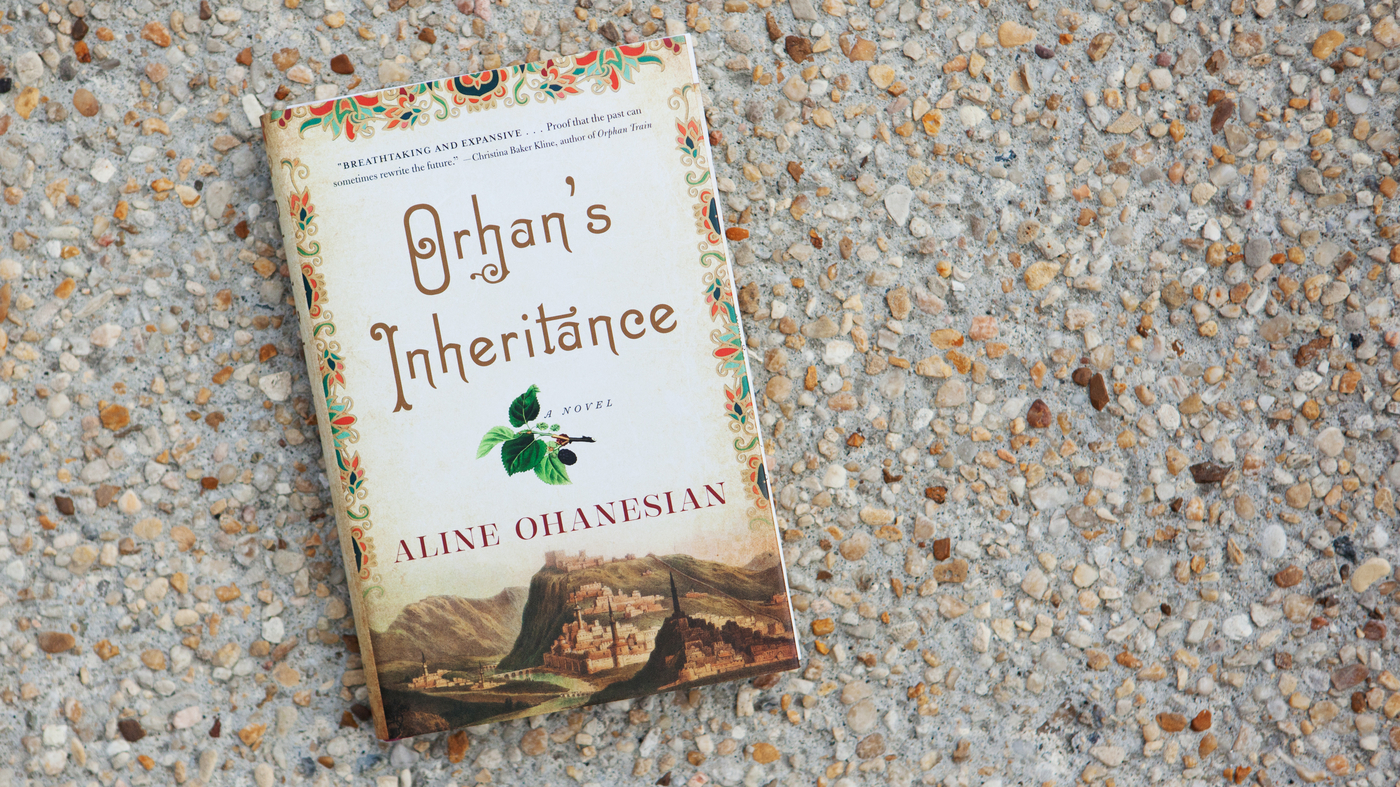
Originally published in 2015, Aline Ohanesian’s debut novel, ‘Orhan’s Inheritance,’ is a beautiful and emotional historical fiction about the Armenian Genocide. While not recognized by many, the Armenian Genocide, facilitated by the Ottomon Empire in an attempt to expel Armenians from the Ottomon Empire after World War One, resulted in the killing of approximately 1 million to 1.5 million Armenians who lived there.
Ohanesian’s novel not only takes us back to that time, but also presents as a reminder that, while the term ‘genocide’ was only coined in 1944 – decades after the Armenian Genocide itself – the term was heavily inspired by everything that took place then, from deportations to mass murders.
The novel kicks off introducing Orhan, a young Turkish man, whose grandfather has just passed away and left the entire family business to him. That’s not the only surprise he’s met with upon his return to his village, but it seems that his grandfather had also left their family home to a woman named ‘Seda Melkonian.’ Angry, Orhan’s father refuses both terms of the will, saying that he is the rightful heir of both the business and the house. While the father wants to forcefully keep the house, Orhan wants to know who Seda is and why the house was left to her.
And so, the story begins. Orhan travels to the USA in pursuit of Seda, whom he finds in a nursing home. In parallel, Ohanesian takes us back in time to Seda’s upbringing – her life with her parents and siblings, her relationship with a young Turkish man with whose family her father did business with, and the Armenian Genocide. We learn that Seda was never really her first name, but first, we live with her the brutal details of her and her family’s deportation.
Lucine – who later becomes Seda – was only a young girl when she, her mother and her siblings were forced to leave their house. Before that, her father and her uncle were taken. She had witnessed her own father’s murder but never disclosed it to anyone, until days later, when she had to tell her mother. But by that time, the mother had already lost all hope, and the better part of her sanity. Over the course of several weeks, we are taken back in time and live Lucine’s pain – the pain of her attempted rape, the pain of losing her brother, her mother, her sister. The pain of slowly losing touch with reality, and causing the death of her baby brother. It was not only loss that she had to endure, but humiliation and a loss of herself.
It wasn’t until later that she was rescued by Fatma, a Turkish woman who runs an inn. This is when she leaves Lucine behind and becomes Seda, helping Fatma run the inn. And this is also where she is reunited with the young Turkish man whom she previously had a romantic relationship with. The man, Kemal, promises her that he did not take part in all the atrocities she endured, that he always thought of her, and that he was forced to join the army. Throughout depictions of her struggle, we also live some moments with Kemal and his point of view from the Turkish army. He promised that he would come back to the inn to get her and that they would live together. Weeks go by and he doesn’t come back.
Fatma, on the other hand, is pregnant with the child of a Turkish bey. She doesn’t know what to do; so when Seda is finally reunited with her uncle and leaves the village, and Kemal finally returns to find her, Fatma tells him the baby is Seda’s. He agrees with Fatma to raise the boy as his own, and she as his aunt. The boy – Mustafa – is Orhan’s father.
Upon learning the truth, Orhan confronts his aunt Fatma, who confirms everything – she is, in fact, his grandmother. After spending several days learning Seda’s story and building a relationship with her, Orhan finds it hard to leave. But after getting the needed signature and attending a memorial for the Armenian Genocide organized by Seda’s granddaughter, Orhan finally goes home. He confronts his father and honors Seda’s wishes and life.
Ohanesian tackles the difficult subject of Genocide without hesitation, shedding light on major events that many don’t know even happened. Through the perspectives of Orhan, Seda, Lucine and Kemal, we are able to examine the lasting impact of this tumultuous period. Ohanesian’s skillful prose vividly describes the settings and characters while addressing topics that remain relevant today.

