
“The man who has a conscience suffers while acknowledging his sin. That is his punishment.”
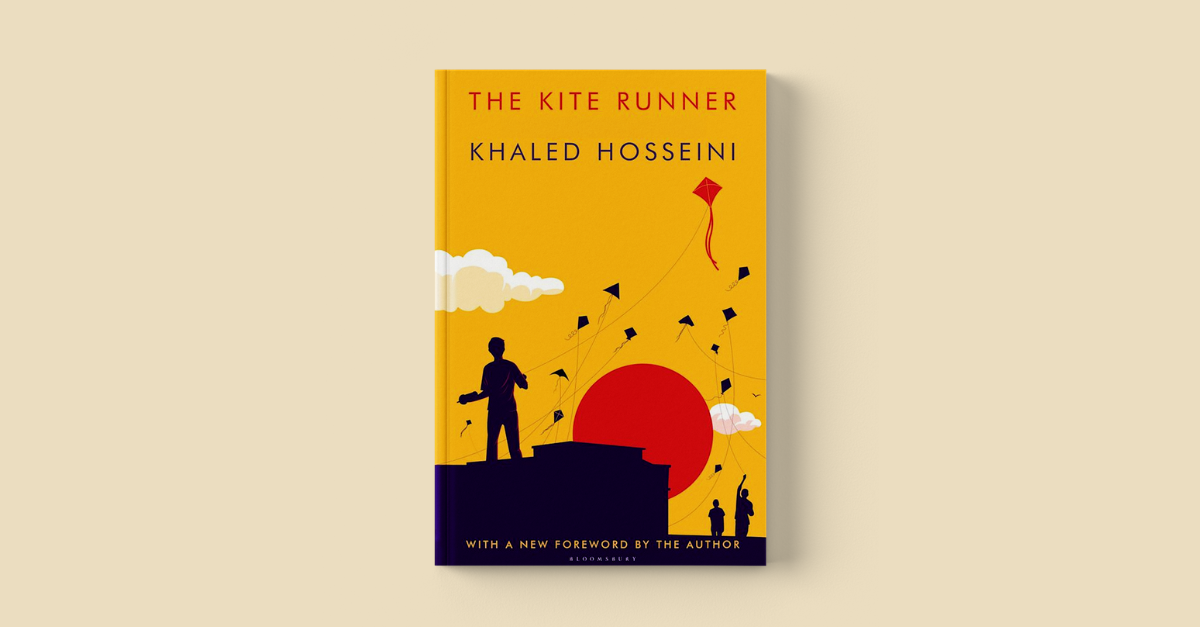
Published in 2003, The Kite Runner is Khaled Hosseini’s debut novel and masterpiece. The book has sold millions of copies worldwide, inspired several adaptations, and won various awards, including the Alex Award, the Borders Original Voices Award, and the Outstanding Books for the College Bound and Lifelong Learners. Translated into numerous languages, the novel appeared on New York’s Bestseller list for two consecutive years. This novel is considered a father-son story that resonated deeply with readers around the globe.
In the peaceful city of Kabul, families harmonize, and children spend their days kite-fighting. Amir, a Pashtun boy, and his servant, Hasan, a Hazara boy, dominated the kite-fighting game using their combined skills: Amir’s kite-fighting and Hasan’s tracking, tracing, and running to collect it. Amir is the son of a wealthy merchant in Kabul, frequently referred to as Baba in the novel, while Hasan is the son of Ali, Baba’s loyal servant.
Although Baba loves and pampers both boys equally, he always criticized Amir for his cowardice, emotional tendency, and frail build, and admired Hasan for his confidence, athleticism, and courage. It became apparent to Amir, over time, that he favors Hasan over him. This was manifested through increased affection towards Hasan and criticism towards him. Due to this realization, Amir began to develop complex feelings toward Hasan, though Hasan showed him nothing but loyalty and always defended Amir from bullies. Amir loved Hasan as his loyal servant and childhood friend; he was, however, envious of him for being the sole recipient of his father’s affection and validation. While Hasan embodies innocence, blind devotion, loyalty, and sincere friendship, Amir is a psychologically complex character who grows up overshadowed by his father’s imposing presence.
Told from Amir’s perspective, the story allows the readers to accompany the main character throughout his journey of character development from betrayal to devotion.
Craving his father’s recognition, Amir wins the local kite-fighting tournament, while Hasan runs for the last cut kite, uttering his famous line to Amir, “For you, a thousand times over.” This is the last normal interaction Amir has with Hasan. While looking for Hasan, Amir finds him surrounded by Asef, a bully with sadistic tendencies, and his gang, who harass Hasan as he clings tightly to the kite and refuses to surrender it. Overpowered by the boys, Hasan falls victim to Asef’s physical and sexual assault while Amir hides and watches. After this incident, Amir begins to avoid Hasan out of guilt, while Hasan’s physical and mental health deteriorate.
The Kite Runner is a story of betrayal, guilt, and redemption; an apt analogy for the butterfly effect, where a single sin that slowly eats away at a person becomes the very force that drives them to seek goodness and redemption throughout their life. Though the cultural and social circumstances are evident throughout the narrative, one cannot ignore the historical and political changes taking place in Afghanistan during that period.
The Soviet Union invades Afghanistan, forcing Amir, an 18-year-old man then, and his father to flee Kabul for California. Ali dies after stepping on a land mine while fleeing the country. Years later, the Taliban seize control of Afghanistan and execute many citizens, including Hassan and his wife, depriving Amir of the chance to reconcile with them. As he grows older, consumed by the sin he committed as a child, he begins to see his father through the lens of his imperfections and flaws and attempts to redeem himself for the betrayal he inflicted upon his beloved Hasan. He does this by raising Hasan’s son with the same devotion embodied by Hasan’s words of endearment, “For you, a thousand times over.”
Hosseini uses an emotional tone and sentimental language throughout the novel, through which he keeps readers emotionally absorbed by the tragic twists and unfolding events of the story.
The Kite Runner is more than a story about guilt; it is a contemplation on whether redemption can ever fully heal the damage caused by betrayal. The novel serves as a moral examination for readers. Through Amir’s deep human journey, Hosseini forces readers to sit with discomfort, confront complex ethical issues, and question our own capacity for change. It is an unforgettable, emotionally gripping book that is highly recommended for anyone willing to face the harsh realities of injustice in order to witness the powerful, redeeming grace of devotion.
